
Community Gardens
Community gardens are an integral part of our local food system, providing growing space to community members and increasing fresh, local, nutritious, and culturally appropriate food production.
Community garden infrastructure is necessary to increase access to fresh produce, which translates to improved food affordability and food security. It also fosters social connections, and develops skills and education in healthy eating - this contributes to improved health outcomes for our entire community!
The Pemberton Creek Community Garden was the beginning of Stewardship Pemberton Society’s journey into community gardening. Seeing the success and impact of this garden has inspired a new garden project at Portage Road.
FALL IS HERE! Check out our fall garden clean up tips at the bottom of the page.
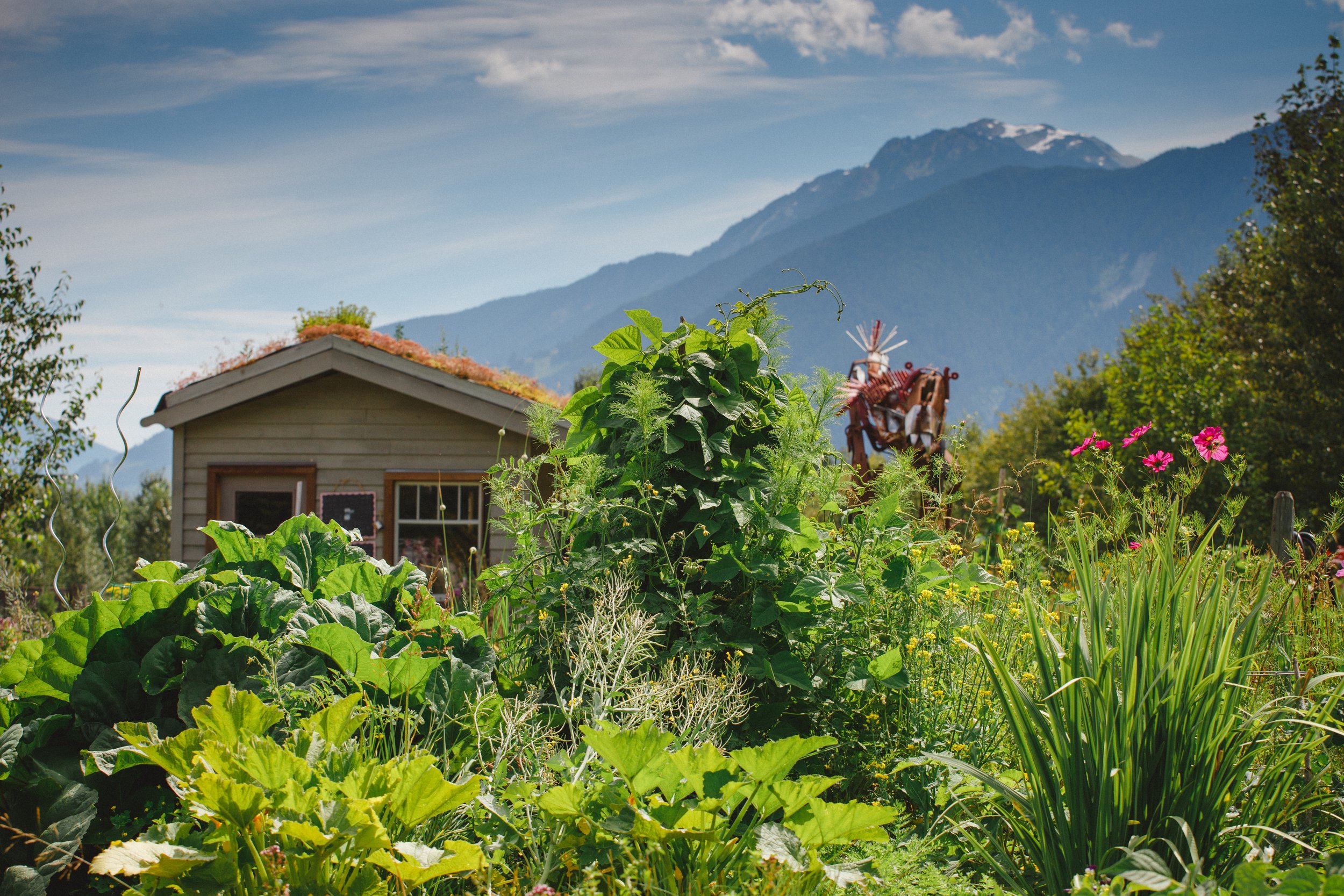
Pemberton Creek Community Garden
The Pemberton Creek Community garden began in 2005 as a Village of Pemberton initiative with 20 garden plots. Over the years, the garden has joined forces with us and grown to 75 plots! The garden is also home to our Grow-It-Forward Garden that grows food for the Pemberton Food Bank and is used as a teaching plot and community space.

NEW Portage Road Community Garden
We are excited for the first growing season at our newest community garden! This garden is a partnership with the Village of Pemberton, and is located at the Multimodal Transport Hub. The garden currently has 46 large garden plots, with a second phase planned this spring to build accessibility and learning focused plots, another Grow-It-Forward Garden, and a community greenhouse!

Global Garden Collective
This volunteer-led garden collective brings together community members with diverse backgrounds to grow food and community. The group manages a garden plot at the Portage Road Community Garden, working together to grow food for the group to share.
Learn more about the collective on their Facebook Group, or email volunteer coordinators Steph and Sumire at globalgarden@stewardshippembertonsociety.com
Fall Clean Up Reminders:
Harvest: Please ensure you're harvesting your garden plots! This is important for many reasons - you've put in many hours of work this season to grow your food, so you should enjoy it! Harvesting produce also reduces wildlife attractants. Lastly, we don't want to see food going to waste. If you're behind on your harvest we are here to help! Just send us an email and we'll be there. We also want to shout out the Pemberton Library - they've got a great collection of books with info on preserving your harvest, plus food preservation equipment you can borrow for free!
Garlic Planting: If you are intending to renew your garden membership next year, October is a great time to plant garlic. The nursery in town sells garlic for planting, as well as many local growers.
Clean Up: Some gardeners like to clean up the minute the first frost hits, and others like to extend the season with late planting of cold-hardy greens. We love both gardening methods, but want to remind everyone about our clean up guidelines. Please make sure your garden is cleaned up / put to bed by November. This includes:
Take down trellises, signs, and decorations that can't hold up to snow load.
Remove fruits and vegetables - ideally by harvesting! If produce has gone bad, you can bring it to the compost pile (zone 2: compostables)
"Chop and Drop" garden debris and plants. By chopping up plant material (4-6" pieces are best) and leaving it on the soil, you're protecting the soil from compaction and erosion, replacing soil nutrients, and reducing the amount of green waste that needs to get removed each year. Some gardeners like to remove nightshade plant debris (i.e tomatoes and potatoes) for disease prevention.
Bring woody stems and weeds to the compost pile (zone 1: removables).
Drain and store away personal irrigation and hoses to avoid freeze damage.
Be mindful - imagine how you'd like to show up to your garden next year, or how you'd like to pass on your garden plot to someone else.
Fall Amendments: If you are intending to renew your garden membership next year, you may consider amending this fall to fertilize your soil for next season. Fall amendments include manure, deciduous leaves, and other organic materials that still need time to break down before getting planted in. To feed your soil with compost, finished (organic) fertilizer, or fresh soil, we recommend you do this in the spring (otherwise winter rain and snow will wash away all those great nutrients).
Winter Mulch/Cover: We encourage gardeners to mulch the soil with straw, leaves, burlap, or tarps to reduce erosion, compaction, and nutrient leaching.
Compost: A gentle reminder that our new system is up and running! Please plan ahead when cleaning up your garden to ensure you're sorting materials appropriately. We also hope garden members can limit how much debris they are removing from their garden - this reduces overhead costs and increases our garden's sustainability. Remember:
Zone 1 - Removables (Weeds, woody plant stalks thicker than 2")
Zone 2 - Compostables (Overripe produce, plant materials removed for disease prevention)
What does NOT go in the compost: Metal, plastic, wood/lumber, and edible produce.
Volunteer commitments: If you signed up to volunteer in lieu of the $30 maintenance fee, we just sent out an email with volunteer info, and an update on who still needs to do their volunteer hours.
Feedback: We'll send out an end of season survey later this fall - stay tuned!
2027 Garden Membership:
All 2026 Garden Members are guaranteed their plots for next year, as long as they renew their membership by our payment deadline. We'll send more info about renewals as the winter approaches. If you know you'll be moving on next year, letting us know as early as possible helps us organize folks to take on your garden plot.